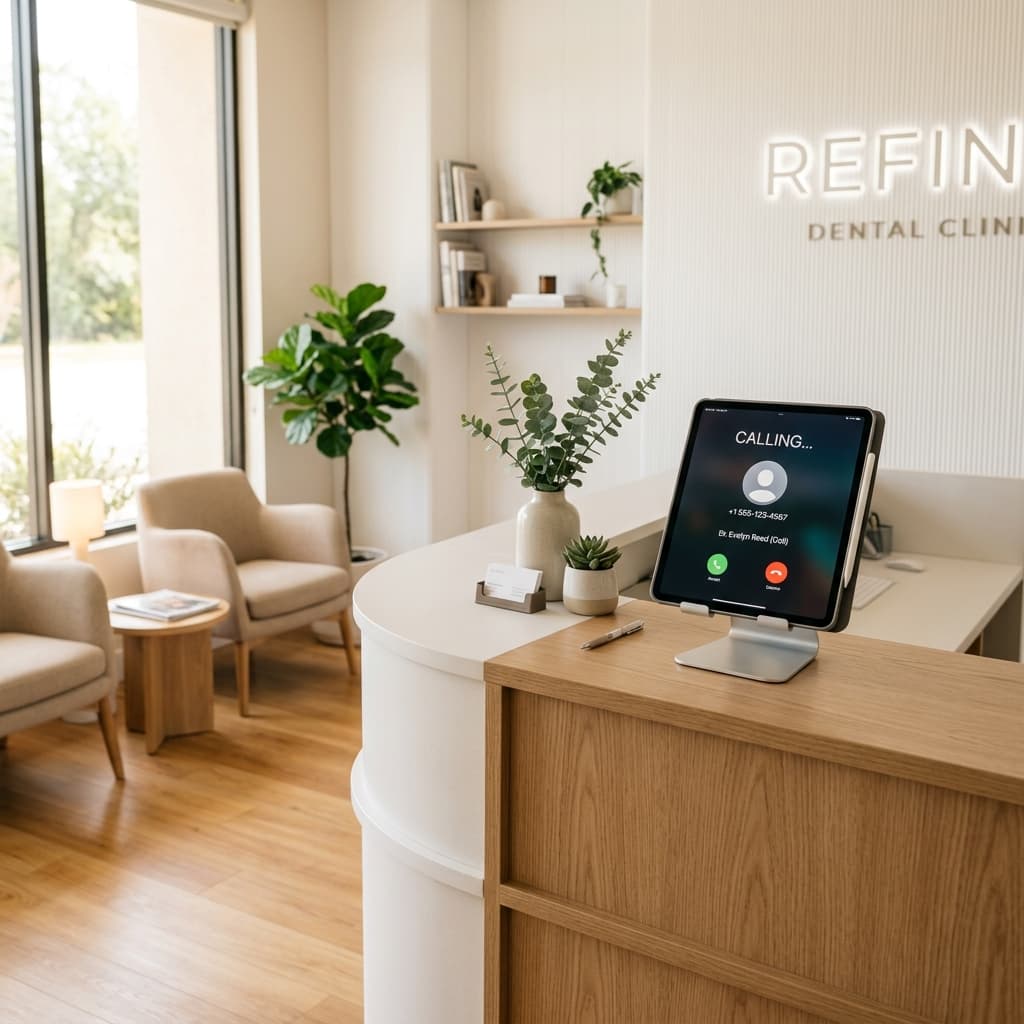
Your receptionist goes home at 6 PM. Patients call at 8 PM.
I've been a dentist for 9 years. And in that time, I've seen the same problem in every clinic: the phone goes silent when the workday ends. But patients keep calling.
Toothaches don't follow a schedule. People decide to book an appointment in the evening, after work. They dial your number. Nobody answers. They Google another clinic, and you lose a patient without even knowing it.
Statistically, the average dental clinic misses 34% of incoming calls outside working hours. Each of those calls is a potential appointment that goes to your competitor.
What is AI reception and how it differs from voicemail
Voicemail records a message. The patient hears 'Leave a message after the beep,' hangs up, and calls another clinic. That's not a solution — it's a way to document lost opportunities.
AI reception works differently. It's a voice assistant powered by artificial intelligence that answers calls 24/7 and has a real conversation with the patient. It can:
— Book an appointment by checking available slots in your schedule
— Answer common questions: 'How much does a cleaning cost?', 'Do you accept insurance?', 'How do I get to your clinic?'
— Send booking confirmation via SMS or Telegram
— Sync everything with your CRM system
The patient talks to the AI just like they would with a human receptionist. Except this receptionist never gets sick, never takes vacation, and never goes on lunch break.
How it works technically (in simple terms)
The patient calls your regular phone number. If the receptionist doesn't answer within a few rings (or outside working hours), the call automatically routes to the AI assistant.
The assistant greets the caller, detects their language (Ukrainian, Russian, English), and starts a conversation. It knows your schedule, list of services, prices, clinic address — everything you've configured.
After the call, you get a notification: who called, what they wanted, whether they booked. The appointment automatically appears in your calendar.
Why this isn't a 'robotic voice menu'
If you're imagining 'Press 1 for appointments, press 2 for information' — forget it. A modern voice assistant speaks naturally. It understands context, answers follow-up questions, and adapts to how the patient speaks.
The most common feedback from clinic owners already using AI reception: 'Patients think we hired a night receptionist.' People simply don't realize they were talking to artificial intelligence.
What tasks the digital secretary handles
The core function is automatic appointment booking. But that's just the start.
AI reception also handles incoming chat messages on your website, responds to SMS, and can call patients proactively — for example, to remind them about tomorrow's appointment or confirm a booking.
For a 2-3 chair clinic, this means your one receptionist can work comfortably without being overwhelmed. For a 5+ chair clinic — it means you don't need a second receptionist for the shift.
What it actually costs and whether it pays off
A receptionist's salary in Ukraine runs 15,000 to 25,000 UAH per month. Plus vacation, sick leave, turnover, training new hires.
AI reception costs significantly less. And it works without breaks, weekends, or human error.
But the real point isn't salary savings. The real point is: calls that used to be lost now become appointments. If one additional patient per month brings your clinic 3,000-5,000 UAH, the AI reception pays for itself in the first week.
Implementation (no IT department needed)
You don't install any equipment. Everything runs in the cloud.
The process is simple: you provide information about your clinic (services, prices, schedule, FAQ), we configure the AI assistant for your clinic. Connect it to your phone number. Test it together.
Most clinics go live within a week. Your team gets a walkthrough before launch. No technical skills required — if you can use a messaging app, you can handle this.
What happens to your human receptionist
AI reception doesn't replace people. It frees them from routine.
Your receptionist no longer has to answer the same questions 40 times a day. Instead, they greet patients in person, help with paperwork, maintain a comfortable atmosphere in the clinic.
AI takes over the phone and chat. The human does what humans do best — genuine, in-person interaction.
Who this is for — and who it's not for
AI reception fits clinics where:
— There are missed calls outside working hours
— The receptionist is overloaded and can't keep up
— The clinic wants to grow without hiring additional staff
— There's a flow of new patients from advertising that needs fast processing
Not a fit if:
— Your clinic sees 2-3 patients per day and the phone rarely rings
— There's no stable internet at the clinic (though the AI runs in the cloud, the CRM dashboard needs a connection)
Next step
If you see missed calls in your phone log every day and understand that each one is a patient who went to a competitor, book a demo.
We'll show how AI reception works with your specific clinic: connect your schedule, services, and answer all your questions. No commitment required.